A Collected Home Can't Be Overnighted...

I’ve been thinking a lot lately about the things we choose to live with, probably because so many different parts of my life seem to be circling around the same idea right now. Between sourcing for Storied Living, creating Insider’s Studio with 478 Creatives, making my own art, and working on curation projects for other people, I spend a lot of time looking at things and wondering why some of them feel special while others are simply filling space.
We’ve gotten incredibly good at filling space. You can decide you need a lamp, find 400 lamps before you’ve finished your coffee and have one sitting on your porch tomorrow. You can find a room you like on Pinterest and, with enough determination and a credit card, recreate almost the entire thing. There’s nothing inherently wrong with that, and I’m certainly not going to pretend I don’t appreciate the convenience of ordering something from my bed at 11 p.m.
But the more spaces I see, the more convinced I am that the most interesting ones can’t be ordered all at once.
“Collected, not decorated” has become something of a mantra for Storied Living, the vintage venture I started with my friend Lindsey, but the idea behind it reaches much further than vintage. A collected home isn't necessarily full of antiques, expensive things or even particularly “good” things. It’s a home where the objects have some relationship to the people who live there.
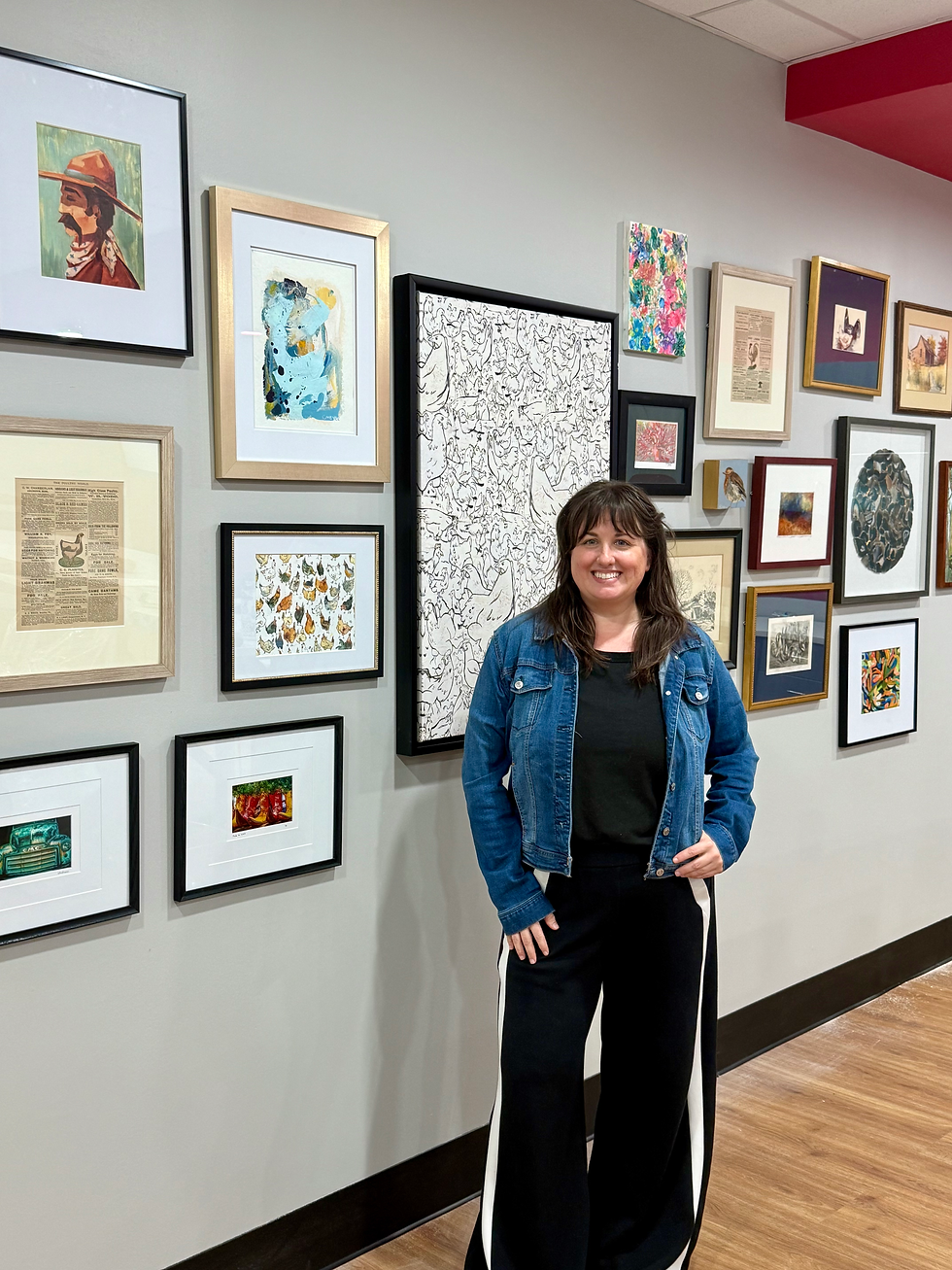
Maybe there’s a painting you bought from an artist you met at a park, a chair that belonged to your grandmother, something you found traveling, a ridiculous brass animal from an estate sale, or a piece of pottery you bought simply because you loved it. Maybe the $8 thrifted thing sits next to something you saved for months to buy. None of it necessarily matches, but somehow it belongs together because it belongs to you.
That same curiosity is really at the heart of Insider’s Studio, too.
When Erin and I started developing the series through 478 Creatives, I wasn't interested in creating another networking event where everyone stands around with a drink and eventually asks each other what they do. I wanted to get inside interesting homes and creative spaces and hear the stories behind them. I want to know whose art is on the wall, why someone kept a particular piece of furniture, where they found the strange thing on the bookshelf, and what made them choose something I might never have chosen myself.
Seeing how someone else lives with art and objects tells you something about them that a perfectly styled room never could.
And I think that's why I've become increasingly uncomfortable with how disposable decorating has become. Mass production has given us access to more beautiful things at more price points than ever before, which is wonderful in plenty of ways, but it has also made it incredibly easy to confuse buying things with creating a home.
There is a different kind of satisfaction in finding something rather than searching for it online or in a big box store.
I see it constantly when Lindsey and I are sourcing. We might find an old lamp buried behind something terrible, a painting with no important signature, a piece of pottery we know absolutely nothing about, or a slightly ridiculous object that neither of us technically needs. Sometimes the appeal is the maker or the history, but sometimes it's simply that somebody made a really interesting thing and somehow it survived long enough for us to find it.
Those pieces give a room a little friction, and I think rooms need that.
I don't want everything to be from the same decade, much less the same store. A beautiful new sofa becomes more interesting next to an old table. Contemporary artwork changes when it's hanging above an antique chest. Something worn keeps everything else from feeling too precious. You don't have to live in a museum or know anything about antiques to appreciate the fact that an object had a life before it reached you.
The other side of this conversation, and one I care deeply about, is what we're choosing to support now.
If we want people fifty years from now to stumble across interesting things at estate sales, somebody has to be buying interesting things today.
That means buying the painting from the local artist instead of the mass-produced print when you can. It means commissioning something specifically for your home and going to the pottery sale. It means bringing home the thing that doesn't perfectly match your color palette but that you can't stop thinking about.
Today's original art is tomorrow's vintage find. The objects we think of as having character and history only have those things because somebody before us thought they were worth buying, using, repairing and keeping.
Maybe that's ultimately what connects Storied Living, Insider’s Studio, my own artwork and the curation work I do for other people. None of it is really about convincing people they need more stuff. God knows most of us have enough stuff.
I'm much more interested in encouraging people to pay attention to what they choose.
I'd rather see someone slowly build a home over ten years than walk into a store and “finish” it in a weekend. Leave a wall empty until you find the art you love. Let the inherited piece live beside the new one. Buy the weird thing. Ask your parents where something came from while they're still here to tell you. Learn the artist's name. Go to estate sales and studios and flea markets and places where you have no idea what you're going to find. Your home doesn't need to impress anyone, and it certainly doesn't need to look like everybody else's.
It should tell on you a little. It should reveal where you've been, what you notice, who you love, what you find funny, what you're drawn to, and what you've decided is worth keeping.
To me, that's a much more interesting way to live with things.



Comments